Legacy B2B Influence Frameworks Are Failing the Enterprise
Episode 1: The Influence Gap
Crystal Golightly: Hello everyone, and welcome to the official episode one of The Influence Gap. Who better to join us for our premiere than Bill Hopkins, founder and CEO of KCG, joining us on the 20th anniversary of his groundbreaking book, Influencing the Influencers. I'm so thrilled to have you here today, Bill. And, of course, I'm joined by my wonderful co-host, Nathan. Bill, for those who might not know you yet, would you like to introduce yourself?
Bill Hopkins: I'm happy to. Thank you very much, Crystal. It's an absolute pleasure to be here—finally! Now that we've cleared a few logistical things out of the way, I could finally get on the show. My name is Bill Hopkins, and I'm the founder and CEO of KCG. We have been doing industry analyst relations (AR) advisory for twenty-eight and a half years. We've essentially been there since the very beginning of AR as a formal corporate discipline.
As Crystal mentioned, twenty years ago we wrote Influencing the Influencers. We're actually starting early work on a second edition right now. We don't quite know yet if it's going to be a second edition or a completely new book, because frankly, it could easily be a totally new text. In the original book, there was no social media, no LinkedIn—pre-all of that stuff. There was no AI; there isn't a single chapter on artificial intelligence in there.
Crystal: Can we go back to those days? Is it too late? [Laughs] Back then, professional and personal lives were actually separate! There was early Facebook, and you did not add your coworkers to your profile. You kept them far away if possible.
Nathan Herrman: I'm incredibly excited for this conversation, Bill. Obviously, our roots are deeply tied to the analyst relations space, and we're going to keep talking about it because it's where we live and breathe. But as we've been discussing on LinkedIn, the broader influence economy is expanding rapidly. There is no better person to ground us in a conversation about the past, present, and future of influence than you.
Defining Influencers in Today's Market
Bill: It’s an interesting dynamic. Because KCG goes so long and deep into analyzing analyst firms—since that's the primary universe B2B vendors deal with, and one firm in particular takes up 65% to 80% of an AR team's time—people sometimes assume we just "don't get" the broader influencer landscape, or that we're only about Gartner. Look, if twenty years ago I thought this was solely about one firm, I would have titled the book How to Understand Gartner. But it wasn't about that. It has always been about the broader ecosystem of influencers, where analysts are simply one distinct category.
Now, we can all agree to have very different definitions of an "influencer" and still get along, right? My definition looks quite different from what a lot of folks mean by the word today.
A Reality Check for the Industry: If you work in AR, manage analyst portfolios, or navigate this space at a leadership level—I've spent close to forty years doing this as an end-user, a Gartner analyst, a vendor, and an advisor. There is no more exciting time to be in this business than right now. And it isn't just because of AI. AI is only one tiny piece of the puzzle. There are so many market factors converging right now to make this one of the most dynamic marketplaces out there. Even outsiders are coming in saying, "Wow, there's some really cool structural shifts happening with analysts."
Nathan Herrman: Bill, let's pull on that thread. You mentioned you have a very specific definition of an influencer. I'd love to hear how you define it. Are analysts included under that umbrella, or are they entirely separate?
Bill: They say you should never start a definition by calling it a range, but I'm going to do it anyway. Influence is a heavily loaded word—that’s practically chapter one, line one of my book. It entirely depends on who you ask, much like the word software.
If I am being hardcore and draconian about who is truly influencing my clients, my definition is strict: true influence requires direct, person-to-person contact. Whether that happens face-to-face or through an electronic medium, it must be a contextual conversation where someone provides tailored advice and opinion to solve a specific business problem. To me, that is real influence.
Frankly, I don't see a lot of the modern, self-proclaimed "influencers" actually influencing final purchasing decisions. The smartest players in the market aren't playing the mass-influence game; they are playing the advice game. That is exactly what will survive and thrive through the AI era: human-to-human interaction, contextual opinion, and strategic problem-solving. It’s not about just slapping an AI chat interface on top of a static research database.
Nathan Herrman: To be highly reductive, Bill—when people think of an "influencer" in the modern marketing context, they usually think one-to-many, top-of-funnel brand amplification where someone is paid by a vendor to talk about a product. But you’re arguing that a true influencer operates deep in the funnel as an advisor—someone a buyer actively approaches for uncompromised counsel.
Bill: You hit the nail right on the head, Nathan, but let me call out the quiet part out loud: modern B2B/B2C influencers are paid by the vendors to help them sell things. True market influencers are paid by the buyers to help them make better purchasing decisions. That is the critical distinction.
Crystal: You're hitting on the core concept that inspired Nathan and me to start this podcast. Top-of-funnel amplification is incredibly easy to see and measure. But organizations rarely make massive enterprise decisions based solely on top-of-funnel motions. When I'm making a high-stakes buying decision, I want to go to a trusted peer or an advisor and ask, "What do you actually think about this?"
When I recently stepped into my new executive role, the very first thing I did was reach out to the analyst community. I had a core set of highly specific questions about the competitive landscape, firm viability, and the market dynamics. I needed real intelligence to map out where I wanted to spend my time, energy, and corporate resources. That gap between high-level noise and deep-funnel validation is exactly what the "influence gap" is.
Bill: And let's be clear—the top of the funnel is still highly important. The entire funnel matters; that's why we call it a funnel!
The Importance of Community and Human Connection
Nathan Herrman: It reminds me of the data coming out of the Forrester B2B Summit regarding preference marketing. The overwhelming majority of modern B2B buyers already have their preferred vendor in mind before they ever formally engage with a sales team. That preference is established through early brand positioning, conversations with trusted colleagues, or peer-to-peer practitioner forums.
Because of information democratization across platforms like Substack and LinkedIn, corporate brand-building has become paramount.
Bill: Absolutely. And Nathan, you're pointing to an ongoing structural issue. In many technology organizations, there is a distinct lack of discernment when it comes to throwing massive budgets at top-of-funnel brand awareness without understanding the conversion mechanics.
Later today, I'm hosting a webinar recapping our annual KCG Connects event in Austin, where we brought together 120 AR leaders in person and dozens more online. A major takeaway from the summit was addressing this exact education gap at the executive level. When an Executive Leadership Team (ELT) or a CMO pushes blindly for top-of-funnel influencer spend, it’s usually because they don't have alternative frameworks to go on. They see the noise on LinkedIn, they get bombarded with questions, and they default to top-of-funnel activities.
They fail to ask the foundational question: When someone actually buys our multi-million-dollar enterprise platform, who are they talking to right before they sign?
They aren't talking to top-of-funnel market amplifiers. Buyers talk to each other, and they talk to dedicated buyer advisors. We have always viewed this as two parallel systems:
The Vendor Mindshare Ecosystem: Where vendors talk to other vendors, amplifiers, and competitors to generate top-of-funnel market buzz.
The Buyer Advisory Ecosystem: Where firms like Gartner conduct over 350,000 end-user inquiries a year, directly advising enterprise buyers on what to buy, who to partner with, and exactly how much they should be paying.
If an executive leadership team doesn't understand the distinct mechanics of these two ecosystems, it represents a clear failure of the internal AR function to properly educate them.
Nathan Herrman: Gartner is a masterclass in full-funnel execution. They've built an incredibly powerful global brand that funnels seamlessly into high-value, deep-funnel conversion.
Crystal: Gartner is undeniably a massive force in the influence economy, but they aren't the only game in town. There are plenty of emerging, highly relevant ways to wield influence across different stages of the funnel.
Bill: The stronger your brand positioning is in the buyer advisory space, the less you have to rely on pay-for-play top-of-funnel tactics. Gartner doesn't need to pay third-party amplifiers to tweet about them to prove their relevance.
Nathan Herrman: An interesting case study right now is Info-Tech Research Group (ITRG). They serve a massive footprint of end-user clients, particularly within the mid-market practitioner level. While they historically lacked the massive global brand recognition of the "Big Three," they are actively going to market highlighting their direct access to a highly actionable pool of buyers. It's fascinating to watch them emerge as a quiet contender in the pure buyer-advisor space.
Bill: Info-Tech is an interesting player, and I’m actually heading out to Las Vegas in a couple of weeks to spend time with their team and conduct one-on-one sessions with their end-user clients to get a deeper feel for their trajectory.
But to connect it back to the funnel mechanics: ITRG has spent the last couple of years trying to figure out how to scale their top-of-funnel presence. My advice to them has consistently been: don't get trapped in the pay-for-play "influencer crowd" model. Don't worry about trying to make people superficially famous. Focus entirely on translating the immense value you already generate at the bottom of the funnel so the market clearly understands your authority. The bottom of the funnel is the hardest piece to crack, and that is where the real commercial power sits.
Reinventing Analyst Relations and KCG's Evolution
Crystal: Bill, I want to pivot slightly and look at your own sandbox. You’ve been traveling extensively, and KCG has undergone a significant strategic shift recently. As someone who has been a foundational influencer in the AR space for decades, how has your own vantage point evolved?
Bill: About two and a half years ago, I looked at my 27-year-old company and decided it was time to completely reinvent it. I started joking around the industry that we were the coolest 27-year-old startup with a 65-year-old CEO in the world.
I saw a massive, unaddressed market opportunity—one that traditional analyst firms are consistently failing to capitalize on. Firms like Gartner, IDC, and Forrester have spent 40 to 60 years building incredible, massive brands. But none of them have successfully figured out how to build and nurture a true, interactive community.
Two years ago, we launched the AR Tribe. Today, it is a fully vetted community of over 800 analyst relations professionals. We enforce strict boundary lines: no analyst firm sales reps, no active analysts, and no vendor-side commercial influencers are allowed in. It is a pure, trusted peer-to-peer sanctuary for AR practitioners to solve real-world problems collectively.
By facilitating this community, KCG gains unparalleled, real-time insight into the exact friction points the industry is facing. We decided to anchor KCG’s entire modern evolution around three core pillars:
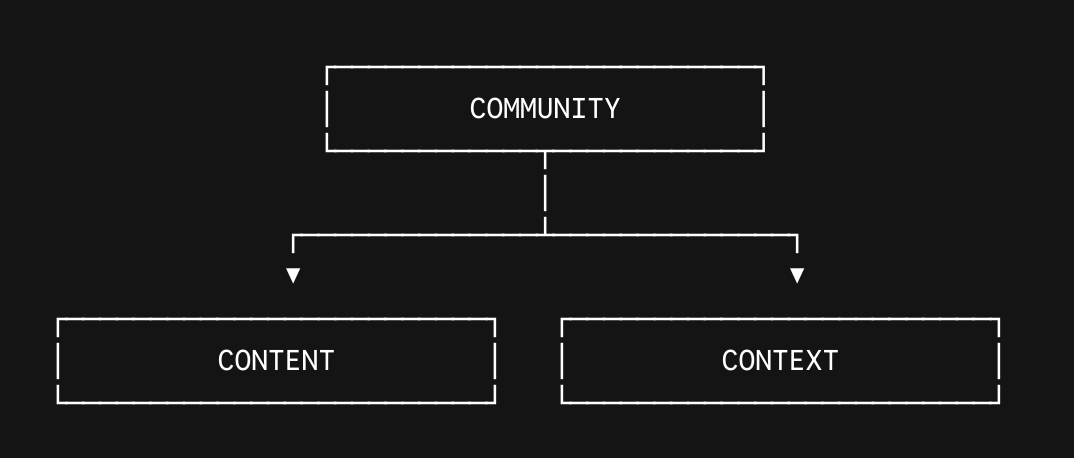
KCG 3 Core Pillars
Traditional analyst firms often view their audience strictly through the lens of a "user persona" or a "functional role" so they can figure out what else to sell them. We don't view our network that way. We view it as an affinity community bound together by shared business problems. If you treat your audience as a community and give them the space to interact, they will explicitly tell you exactly where they want to go, what products they need, and what insights they lack. It has completely transformed how we serve our clients.
Crystal: You're doubling down on relationship equity, which is the ultimate corporate superpower. As AI becomes deeply embedded in everyday business workflows, the value of unforgeable human connection is skyrocketing. The analysts I engage with aren't even using the phrase "human in the loop" anymore—they're calling it "human at the helm." Investing heavily in community ensures you have a direct pulse on market sentiment, allowing you to build trust equity rather than just chasing short-term monetization.
Nathan Herrman: Humans inherently crave community—it’s an empirical truth. Whether it's an industry-specific Substack, a dedicated professional forum, or a specialized podcast, buyers naturally gravitate toward spaces where smart people share verified experiences.
This ties directly into the rising importance of modern buyer intelligence. It is no longer enough for a company to understand macro-level market trends. Organizations must map the exact, highly specific micro-communities—whether they live on private Discords, specialized subreddits, or closed practitioner networks—where their specific buyers go for unvarnished answers. In the age of AI, highly localized, human-verified intelligence is the ultimate differentiator.
Bill: Spot on. True intelligence must be applied through genuine human interaction. Smart professionals recognize that the highest value lies in the collective knowledge of the peer network they curate. That was the foundational purpose of the Tribe: creating a high-trust environment for the smartest people we've worked with over the past three decades.
Integrating AI with Knowledge Management
Crystal: Bill, I know you have a long history with computing frameworks. Without spiraling into generic AI hype, how are you practically thinking about the intersection of AI and knowledge architecture?
Bill: To give you some funny historical context—back in the early 1980s, I wrote a thesis project on artificial intelligence for a course I was taking at Harvard Summer School. The very last sentence of my paper essentially said, "Forty years from now, this technology may actually come to fruition." Well, it's been forty years, and here we are.
At KCG, we have been active, hands-on users of AI platforms for over three years. But from day one, my absolute prerequisite was corporate data sovereignty. I refused to let our teams utilize public models where our proprietary data could bleed into the public domain. We deployed an enterprise-grade framework with ironclad data moats around our proprietary assets.
We spent years structuring and training a private instance on our unique IP—essentially building a digital knowledge graph of KCG’s combined insights. We funded the development of a custom application that sits on top of our comprehensive content engine, spanning twenty-eight years of KCG intellectual property, research methodologies, and historical firm profiles.
Now, we have integrated this architecture across our ecosystems:
GenAR: Our proprietary AI engine available to our KCG Essentials clients. A user can input a complex query, and the system simultaneously queries our vast library of formal research alongside the anonymized, aggregated conversation histories of the AR Tribe.
For instance, one of our highest-velocity inquiry areas centers on emerging or volatile analyst firms where vendors are constantly wondering, "Should we invest corporate dollars in a formal partnership with this firm?" Instead of delivering a static, out-of-date PDF, our system synthesizes decades of formal structural profiles with real-time community sentiment regarding the firm's current market performance. It delivers instant, highly contextualized, actionable intelligence.
Nathan Herrman: That is an exceptional case study in knowledge transformation. Taking decades of highly specialized, niche intellectual property, wrapping it in a secure data architecture, and commingling it with real-time human sentiment creates an incredibly defensible business model.
Bill: It was born entirely out of operational necessity. Technology will always optimize how you execute workflows long before it fundamentally alters what you are trying to achieve.
In analyst relations, our core mandate hasn't changed: we work with the most strategically vital influencers in the marketplace to drive measurable commercial outcomes for our organizations. AI changes the speed, efficiency, and scale of how we analyze that landscape, but it does not replace the fundamental human mechanics of the relationship.
The Future of the Advisory Model
Crystal: As we look toward the horizon, let’s talk about where this entire information and advisory economy is heading.
Bill: Let me leave you with a highly intentional, controversial framework: Pure information brokers and commodity insight providers are operating on borrowed time.
I am not suggesting macro-research giants are going out of business tomorrow, but their traditional commercial models must fundamentally transform. In an era where data is instantly democratized and synthesized by language models, simply sitting on top of siloed, generic market data and selling access for a massive annual price tag is a dying strategy.
There is a stark contrast between a pure information broker and a deep-funnel end-user advisory firm:
Firm Model TypeCore Value PropositionVulnerability to AI DisintermediationInformation Brokers (e.g., Traditional Market Research Houses)Scale, macro-data tables, market share tracking, volume report publishing.High (Highly vulnerable to data democratization, automated collection, and LLM synthesis).End-User Advisory Firms (e.g., Deep-Funnel Buyer Advisors)Contextual inquiry, personalized validation, tailored risk mitigation, peer network access.Low (Highly defensible due to the irreplaceable nature of contextual human judgment).
During my entire tenure as a Gartner analyst, I almost never had an enterprise end-user client call me to ask about generic market share percentages or macro growth curves. Vendors care deeply about that data; buyers do not. Buyers call an advisor to mitigate risk: "We are about to spend $10 million on a core infrastructure transformation. Based on what you know about this vendor's current product roadmap, executive stability, and delivery track record—are we making a catastrophic mistake?" That is an advisory conversation, not a data delivery transaction.
Firms focused heavily on the asset-creation and information brokerage side recognize the writing on the wall. The current holy grail in the B2B tech space is trying to seamlessly marry macro-market data with deep-funnel buyer intent data. While many players are launching AI-driven discovery engines to capture early-stage intent, the ultimate victor will be the entities that understand that real, structural market shifts happen incrementally—until you wake up one day and realize the landscape has completely transformed.
To use an old literary analogy I always share regarding the impact of AI on analyst relations: for a long time, we were looking at chapter one, page one, line one: "It was a dark and stormy night." Over the past 24 months, we've finally written the second line: "It was a dark and stormy night, and I heard footsteps down the hallway."
It's going to be an incredibly exciting, fast-paced couple of years, and I am absolutely thrilled to be right in the thick of it.
Crystal: Bill, thank you so much for joining us and dropping so much incredible wisdom for our premiere. We might actually have to split our future chats into two-part episodes if we keep going deep-funnel like this!
Nathan Herrman: We went full long-form broadcast today. This was fantastic, Bill. Thank you for setting such a high bar for episode one.
Bill: It was my absolute pleasure, Crystal and Nathan. I had a wonderful time.
Crystal: Thank you everyone for tuning into the premiere of The Influence Gap. We're taking a step back into the mechanics of how decisions are truly made, and we can't wait to bring you along for the journey. See you all next time!
